
By David Smith, M.Sc., CSCS., SDL (He/Him)
One of my first real applicable experiences in infusing sport psychology with coaching started well before I became involved at all. That is, I was coaching one weekly session for the large adult master’s inclusive swim team that was focused on technical skill development and conditioning. This group was known as the “Technical Conditioning Group” meant for new and novice swimmers, and distinctly separate from the team’s “Performance Group” which focused more on advanced and experienced competitive swimmers.
One of the Performance Group practices took place every Wednesday, it was very popular because of the timing and location made it very convenient. The original Wednesday coach though was dealing with burnout. Often writing a basic set on the board and then leaving the swimmers to do the workout with minimal instruction thereafter. It was a culture of show up, swim as much as you want, and go home. As swimming is generally an independent sport, even with a swim team it had felt as independent as one can get. Soon thereafter the coach decided to step down and a new coach brought on. Infusing some much needed fresh and new energy into the team in the very beginning but unfortunately was not sustainable. The coach-athlete relationship started to degrade as reports of instability and conflict between the coach and swimmers, as well as between the swimmers started to increase. Some of these swimmers shared with me they felt the practice was becoming increasingly stressful and toxic, they were more likely to quit attending altogether. Among the swim team’s coaching staff and administration, this became known as the “Wednesday Problem”.
The day came when the Wednesday coach couldn’t handle it anymore, and in a dramatic fashion rage quit via email on the day of practice. I was asked to fill in temporarily while they figured out a long-term replacement. I had been wanting to take over the Wednesday practice for quite some time, especially when I learned about the major issues that were arising. Upon attending and coaching that first practice, the “Wednesday Problem” was immediately apparent, although it wasn’t just one thing but rather a multitude of different thinks rooted in:
- Environment: The swim team had only three lanes in an 8-lane pool that was overcrowded with other swimmers. Pool area was very noisy, and the water was very choppy, unconducive for a swim team practice.
- Culture: There was a clear lack of enforced etiquette and no guidance regarding lap swim protocol or team culture, leading to a lot of conflicts and collision.
- Team: It was clear that the previous coaches paid little attention to athletic development of the swimmers, with less focus on the training process itself and no regard for technical or tactical skills. The lanes were overcrowded with too many swimmers per lane, with the practice way over capacity.
Furthermore, this was coming out of the Covid pandemic, so the team had no central focus or competitive goal to rally around. As a result, swimmers would show up late and leave early, attending for their own reasons more so than anything else and just accepting the bare minimum. As a result, the practice was very high stress, which was perceivable for me, as the coach, right off the bat. I had already known some of the swimmers both from coaching other sessions and having attended this session myself a swimmer. Thus, thankfully most people were familiar with me which made that first practice session relatively smooth. But the Wednesday *Problem* was immediately self-evident.
As both a coach and a sport psychologist, I was very excited at the prospect of taking over this practice as I had been looking for a real challenge to my skills and capabilities. Unfortunately, I faced a setback when they decided to hire another coach for the job. The following week the new coach accompanied the original coach to the session to meet the team and get acquainted with the practice, and then take it over from there on out. However, after attending the first practice the new coach immediately turned down the job, the Wednesday Problem was self-evident to them too and they wanted nothing to do with it. Thus, I was asked again to fill in at the last minute, I agreed only on the stipulation that I take over the Wednesday practice permanently. Clearly, I was the only one suited to take on this challenge.
Upon my first practice as permanent coach, I focused on understanding the key issues contributing to the issues in practice, noting things I could control (culture) and could not control (environment) as well as things I could guide (team). My outcome goal in this regard was to craft a practice environment in which the stressors created were channeled into a productive session that resulted in increased engagement, higher effort, and overall positive experience for all the swimmers on the team. Fostering a training session where people felt they had a sense of purpose and drive, creating a space where they felt safe and ensured that every swimmer finished practice feeling better than when they started.
But it wasn’t going to be easy. On the first practice back, a minor hand to wrist collision (common in swimming) immediately led to a major drama in the middle of the swimming lane. The week after that, a snarky exchange led to a huge blow up requiring my direct intervention to stop a fight in the locker room. Have you ever had to physically put yourself between to stop two naked swimmers from beating each other up? I have.
Stress was high and people were frustrated. I had my work cut out for me and it was going to take time. Everything is a process. Right off the bat, the way I handled these dramas via my conflict management skills were key in setting the tone and standard of expectation for my performance as a coach. I would need to make some major changes to the practice, but to do so without losing any swimmers would require me to create strong athlete buy in to my leadership. People tend to feel safe in what they know, even if it’s toxic and stressful. To create change requires a sense of openness and trust that isn’t easy for someone new in charge. This is where the previous coach had struggled. For me, these dramas were perfect timing because they served as an opportunity for me to make an immediate intervention, show my conflict management skills to resolve the immediate situation, and use them to have the “hook” I needed to create the buy in from the team toward enacting greater global level changes. And it worked, even better than I had anticipated. This was indicated when the instigator of the naked lockerroom conflict who was known for having a guarded attitude, took the first action to apologize. Quite an unexpected outcome that surprised everybody on the team. It was very validating for me in my professional scope given the way I managed the conflict and helped create the perfect buy in I needed from the team.
From then on out, I took two major actions on my part toward creating a standard of expectation and a culture of performance. This is further rooted within the fulfillment of the three basic psychosocial needs of self-determination, social support, competency, autonomy. By fulfilling these three psychosocial needs via the way I run the practices, I help foster intrinsic motivation within the swimmers and develop a motivational climate built upon empowerment and positive stress, rather than negative stress and toxicity.
The standard of expectation started with a constraints led approach, establishing boundaries of respect for each other within the practice and rooted in developing base social support. Enforcing proper lap lane etiquette by ensuring consistent traffic flow in the swim lanes and specific rules regarding passing slower swimmers, stopping/starting on the wall, and other things. Minimizing potential conflicts, unexpected distractions and reducing collisions while maximizing swimming time and task focus. At the beginning of every practice included a reminder of these rules but also underlying a clear consequence if they are routinely violated that the swimmer will be asked to leave practice. Swimmers can feel safe to *swim* their set without dealing with distractions of being passed or worrying about where other swimmers are. Furthermore, this helped establish a “pecking order” of swimmers based on the fastest swimmers in each lane and helped facilitate communication so if a swimmer wanted to go ahead or behind another, they could ask to change position in between sets without all the drama.
The culture of performance is first centered around the warm up as always being a consistent set focusing on free swim, kicking, and medley stroke work via both long and short distance. By using a consistent warm up set, the swimmers themselves have a sense of stability within their practice to ensure the body and mind are primed and ready for training. For myself as a coach, it establishes a consistent standard of performance that swimmers must be able to achieve to join the “performance group” to ensure that the level of competency for this session is appropriate. This would be the standard then I share with my technical conditioning group to give them a focus to train for. Noting that if they want to join the performance group then that warm up set must be something they can do within the allotted warm up time.
Furthermore, the culture of performance was built upon the way I designed the training program relative to the size and needs of the group on each given session. That is, this is a competitive level swimming group, thus, we are going to train for competition together. Even if some swimmers are not interested in competing, that’s okay; the focus on the practice is built upon the training process itself. This includes technical and tactical conditioning in regard to stroke work, starts and turns; but also physical and mental conditioning for sprints, mid distance, endurance. Training aerobic and anaerobic capacity but with a built in sense of autonomy to allow swimmers to choose the specific focus they wanted to work on most. This develops autonomy within the team to ensure that the practices are designed relative to the wants, needs, and goals of the swimmers themselves. While most swimmers were consistent, attendance was voluntarily so there would be fluctuations in the size of the team or the level of competency, requiring a more athlete centered approach to coaching. Thus, each training session was designed with this consideration to ensure maximum effort output and productivity relative to the needs of the team. Doing this by communicating with the individuals on the team regularly and asking them what they wanted to gain from the practice.
While this process of change took some time, certainly facing some road blocks on the way (no more naked locker room fights after the first one though). Did my changes work? How could I tell? There was a clear and notable shift in the overall mood and motivational climate of the group. Swimmers who used to leave practice early were consistently staying for the extra time and showing up on time more regularly. Swimmers were more open to skill and technique adjustments, open to feedback, willing to try new things, practice them consistently, and seeing the subsequent improvements. Seeing the results was always exciting with more swimmers coming to me sharing about the progress they were making.
Very soon the Wednesday “Problem” turned into the Wednesday session becoming so popular that we (unfortunately) had to put a maximum capacity on the practice. However, it didn’t just stop there as more people wanted to join us for practice, with my technical conditioning group also having a maximum capacity and expanding our practice into other times that previously had very little attendance. Once word got out that our swimmers were swimming hard, having fun, and seeing results, we could hardly keep the doors closed and the swim team quickly grew to capacity as the largest group in the whole club.
A real test of my new standard of expectation and culture of performance came a few months later. Every practice we’d gather as a group outside the pool waiting for our time to come in and I’d always take the time to “check in” with everybody. Just casual “hey how are you?” type chats that would help me learn the “mood” of the team that day. Well on this particular session it was way too hot and humid outside, so everybody wanted to swim, and our practice was already overcrowded. Furthermore, people were having a bad day and just stressed out from life. It was all the elements in place for a disaster and I was not interested in breaking up naked locker room fights again, so I knew I had to help them do something with all this energy. Thankfully after months of coaching and positive development, the team trusted me as their coach, and I could tell exactly what they needed. A good high intensity session designed to whoop some butt. So, we got to work with short, high intensity intervals at race pace with minimal rest, great for building anaerobic capacity and releasing some stress. Only possible with a team that you know is willing to put in the work to make it happen because it’s gonna hurt. The whole team stayed for the entire duration of the practice and put forth their maximum effort into the set that by the end of practice. Once the endorphins hit the brain and the satisfaction of finishing the set hit, it was pure bliss to the point where the lifeguards were worried, they’d have to use the net to scoop some bodies out. The team was exhausted but left practicing feeling relaxed and happy. Mission accomplished.
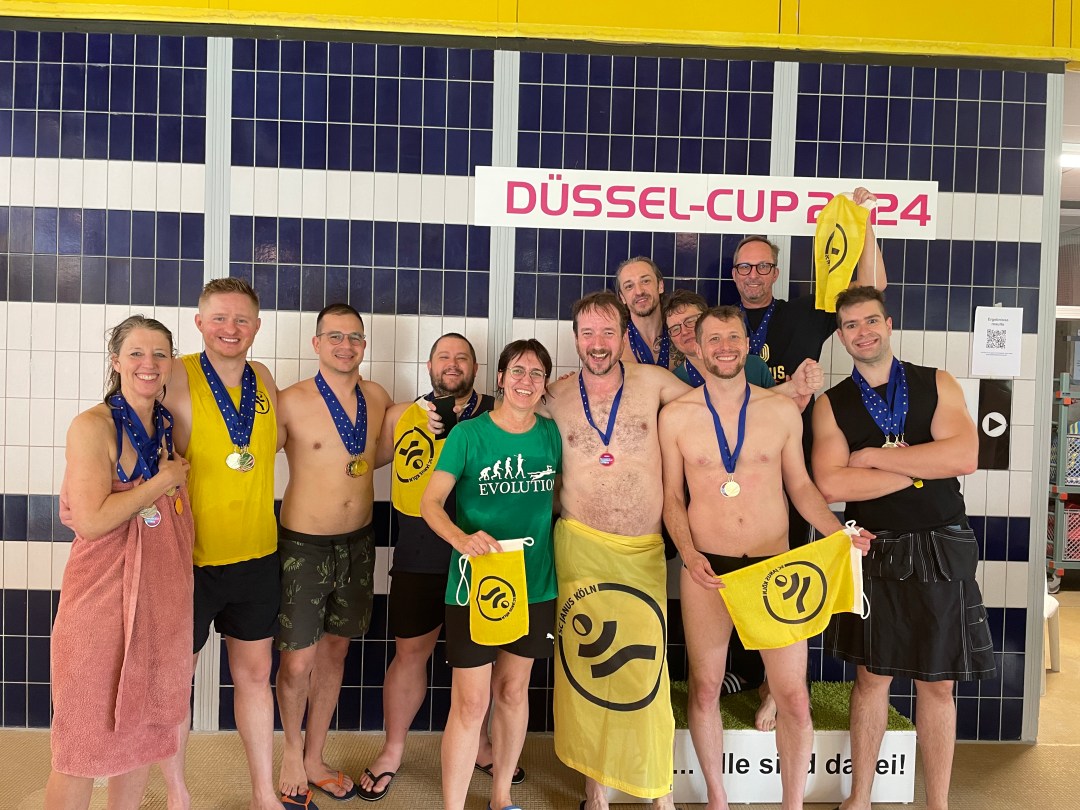
At the same time we started attending local LGBTQ+ swimming competitions, where I was encouraging many new swimmers to sign up and compete for the very first time. After all, this was the focus of our training. Getting to watch my swimmers push themselves and discover their capabilities, helping challenge them to push harder and go further, seeing their motivation to learn and grow. Pushing them to take the next steps and try something new, to watching them swim their first races, post new personal bests and even win medals. Helping them discover a world where “sport” is more than just physical fitness. I’ve always believed in the power of sport along with the physical, mental, and social benefits of it as a major driver for my career. For the first time, I felt like I was truly achieving that, and it was immensely validating and fulfilling for me to see and be part of. For as much as I challenged my swimmers and pushed them to discovery what they are truly capable of, they did the same thing for me as a coach. Seeing such positive results in my work with them helped me to realize, for the first time, the positive result of all these years of hard work and challenge that I set out to pursue. It was everything I hoped it would be and more.

 stonewallperformance.com