
By Dr. David Smith
The International Olympic Committee (IOC) recently announced a blanket ban on all transgender women and athletes classified DSD (Differential Sex Development), also commonly known as “intersex” from competition. This comes in the lead up toward the LA2028 games and at the behest of the current US government which has become increasingly hostile and discriminatory against transgender, nonbinary, and intersex people.
The IOC makes claim that its decision is scientifically supported, but the legitimate albeit limited research that does exist simply does not support their claims. Furthermore, the IOC’s statement does not cite any specific studies nor any anecdotal evidence for which their claim is based upon, rather it states:
“The working group reviewed the latest scientific evidence, including developments since 2021, and reached a clear consensus. Male sex provides a performance advantage in all sports and events that rely on strength, power and endurance. To ensure fairness, and to protect safety, particularly in contact sports, eligibility should therefore be based on biological sex. The group also agreed that the most accurate and least intrusive method currently available to verify biological sex is screening for the SRY gene, a segment of DNA typically found on the Y chromosome that initiates male sex development in utero and indicates the presence of testes/testicles.”
The IOC has previously been inclusive of transgender athletes for 18 years, with the first policy permitting transgender athletes to participate in Olympic competition on the books since 2004. During this 18-year period, only one transgender woman has ever qualified and participated in Olympic competition when weightlifter Laurel Hubbard competed in the 2020(21) Olympics in Tokyo. During that event, Hubbard ultimately finished last in the competition when she was unable to complete several of her lifts.
Much of the controversy surrounding this policy has been on athletes with the DSD classification, most notably Dutee Chand and Caster Semenya. Semenya herself having been illegally “examined” and violated without her consent to “prove” she was biologically female. Despite her more masculine appearance and social expression, she has been under constant scrutiny and investigation regarding her “biological sex”, including invasive examinations and probes conducted by representatives of World Athletics and the IOC. Her book “The Race to Be Myself” she describes in great and honestly horrific detail about how she was treated by these organizations just for the sake of competing in an athletic competition.
None of this is new nor unfamiliar to the IOC and especially to World Athletics. In the book “The Other Olympians: Fascism, Queerness, and the Making of Modern Sports” authored by Michael Waters chronicles the long and pervasive history of gender testing in sport and using transgender athletes as a scape goat to exert control over women’s bodies.
During the early years of the Olympic movement, women were initially excluded from sport and begrudgingly permitted only to participate in sports that were considered “feminine” and “ladylike”. Banned from other sports, including track, because doctors claimed that physical exertion would be harmful to women and would look “unsightly” and “unattractive”. Thus, in the early 1920s Alice Milliat created the “Women’s Olympic Games” which was changed to “Women’s World Games” after the IOC complained about the use of the word “Olympic”. At the Women’s World Games, female athletes were able to compete in numerous sports that they were previously excluded from, including soccer and track. Initially ignored by the IOC and organizations like World Athletics (then called the IAAF), the Women’s World Games grew in popularity and power that soon the IOC saw them as a threat to the their fragile hold over sport.
The Women’s World Games themselves did have their own controversy, often times women from Eastern Europe, an area where daily life was physically laborious would compete against women from North America where daily life was otherwise meek. Thus the physically stronger women from Eastern Europe would often dominate the competitions, leading the meek women from North America to complain about “unfair advantages” and claim that they were really men. None of their claims were true of course, but the hegemonic femininity of North America and Western Europe was directly challenged by strong women from places where physical labor knew no gender. At the same time two athletes, Zdeněk Koubek and Mark Weston who previously competed at the Women’s Games later came out as trans men (woman transitioning to man). While these men only came out and transitioned after their athletic career’s ended, it was novel enough for others to complain and raise questions about gender verification in sport,
Of course, the IOC and World Athletics latched onto these complaints and used it to undermine Milliat’s Women’s World Games movement, usurping control and eventually folding it into the IOC in the 1930s. Still with restrictions on women’s participation in key events, with full women’s participation in all Olympic events only achieved in 2024. Because of Koubek and Weston, the 1936 Olympics in Berlin became the first-time gender verification testing was implemented in sport over unfounded fears that a man might pretend to be a woman for the sake of competing. Eventually this was fully expanding in the 1950s to become a formal IOC policy that required all female athletes to be tested and “licensed” to compete. Starting with “nude parades” where women were forced to strip naked for male doctors, then chromosome testing which quickly showed that gender is much more expansive than XX/XY, eventually then arbitrary limited setting limits based on blood testosterone, and now the current IOC policy based on the presence of the SRY gene. It is important to note that all these “gender verification” standards have been based on hegemonic femininity within white, cisgender, Western European/North American ideals. Intentionally meant to be exclusive of athletes representing a large majority of African, Asian, Pacific Islander, Eastern European, and South American populations where the social construct of gender identity is represented differently.
Milliat’s Women’s World Games would not be the last women’s and queer sport movements to be dismantled and threatened by such patriarchal institutions attempting to maintain strict control over hegemonic gender ideology in sport. In the 1970s following the passage of Title IX, the NCAA refused to have anything to do with promoting women sports in college, going so far as to undermine the policy by claiming they were exempt based on being an independent organization. The Association for Intercollegiate Athletics for Women (AIAW) was created to promote and develop women’s collegiate sport instead. The AIAW was led by women, hired women into roles of leadership and coaching, and directly challenged higher education institutions to ensure they met their Title IX requirements. The AIAW was wildly successful to the point they were perceived as a threat to the NCAA which swiftly moved in to take control. The NCAA ensuring leadership and coaching positions were predominantly filled by men and thus, maintaining the status quo.
By the 1980s, the Gay Olympic Games was founded by Tom Waddell as a representation for gay and lesbian people, long excluded from sport, as a space to participate and compete openly. Just like the Women’s Olympic Games, the IOC and USOC objected to the use of the word “Olympic” and filed a lawsuit against Waddell, to undermine the event by forcing them to remove the Olympic at the very last minute. Changing the name to “Gay Games” the event directly challenged the heteronormative institution of sport to further queer representation within the institution. While the Gay Games started off more conservatively on its own front, it became a leading vehicle to challenge stereotypes, prejudice, and misrepresentation of queer athletes. Especially in regard to HIV/AIDS, same sex pairs in sports such as figure skating, gender roles in sport such as artistic swimming, and also became the first to openly include transgender athletes to compete without restriction in the gender division aligned with their identity.
Such inclusion of trans athletes has been challenging, with the Gay Games having to balance inclusion with the heteronormative and exclusionary policies of the sport sanctioning bodies. The Gay Games have often walked a fine line but serves as the only sport institution who is willing to directly challenge these policies through active representation and participation in sport. Trans, nonbinary and “DSD” athletes have been competing at Gay Games and other LGBTQ+ sports events for decades now. Hundreds athletes and competitions participating at various levels that have directly challenged these stereotypes and assumptions, showing through active sport participation that no, trans/nonbinary/DSD athletes do not maintain any “unfair advantage” that can be reasonably attributed to their “biological sex”. By simply participating and competing at a Gay Games, meeting those athletes taking part and seeing them compete will show that. And as far as the so called “elite level athletes”, those who’ve been represented at that level represent outliers of outliers, less than 10 people out of a world population of 8 billion.
Just like the Women’s World Games, the Gay Games exists as an act of representation and resistance against an institution that is built upon exclusion. The IOC continues to show that it is driven toward exclusion based on political ideology, fear, and willful ignorance rather than through science, experience, and wisdom. Thus, it is important for Gay Games and other LGBTQ+ inclusive sport organizations to step up, stand for, create spaces and drive forward athletic development for the transgender, nonbinary, and “DSD” athlete communities. By fostering active inclusion in sport, this is our opportunity to show through participation and representation that trans, nonbinary, and DSD athletes deserve an equal and fair place within sport.
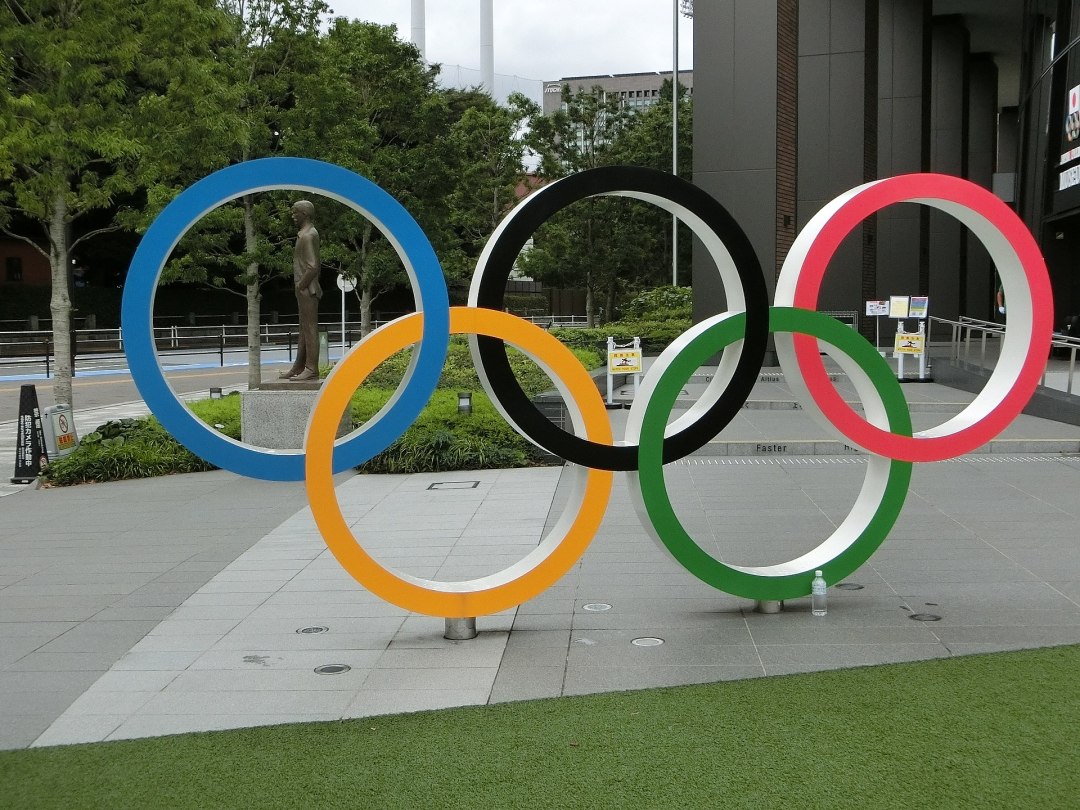
Image Credit: RuinDig/Yuki Uchida via Wikimedia Commons

 stonewallperformance.com
